
Japanese celebrations that remain today
begin with enjoying food.
What is "O-くいぞめ (O-kuizome)"?
"O-kuizome" is a ceremony where the family and relatives surround the baby and perform the gesture of eating a celebratory meal of ichijusansai (one soup, three dishes), celebrating "the baby safely reaching 100 days old," and wishing "that the baby will never be troubled by food throughout their life" and "that strong teeth will grow."
Since it is often held 100 days after birth, it is also called Hyakunichi Iwai (hundred-day celebration).
The O-kuizome ceremony, with its wishes for "never being troubled by food throughout life" and "strong teeth to grow," also includes the desire for the daily mealtimes with the baby to be filled with even more smiles in the future.
We hope you can enjoy a celebratory meal that enriches your daily life.

What kind of tableware should be used for O-kuizome?

Traditionally, lacquerware is said to be the formal choice. However, there are no strict rules that dictate this. When choosing lacquerware, for boys, both the outside and inside should be vermillion. For girls, the outside should be black lacquer and the inside vermillion. (This may vary by region.)
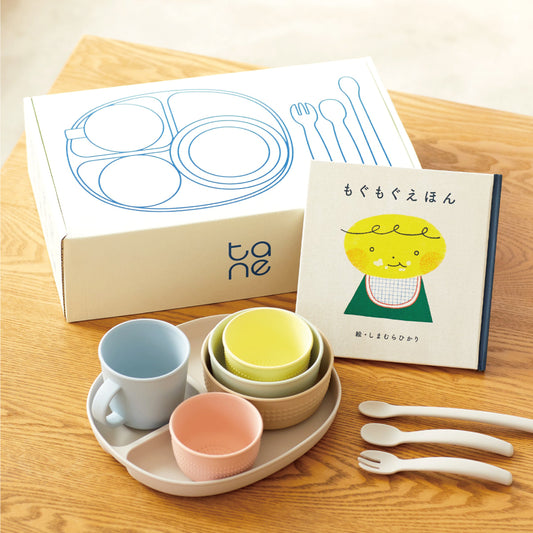
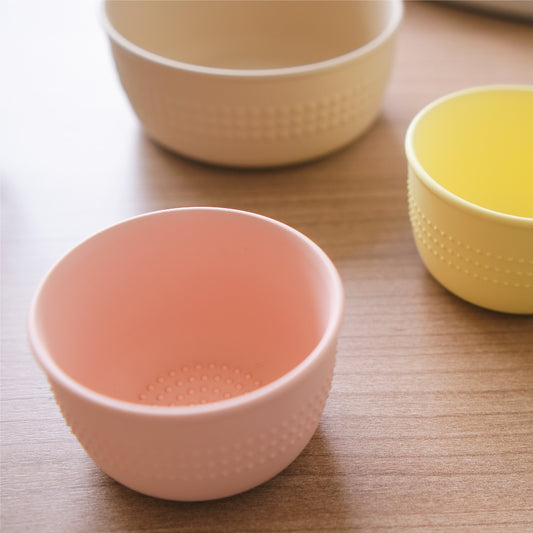
In recent years, in addition to lacquerware, there are various materials available such as stylish and easy-to-use ceramics, wood such as bamboo, and safe and convenient plastic.
Traditional lacquerware becomes a special commemorative item, and if carefully stored, it can be used for various celebratory ceremonies for a long time.
Practical tableware will be useful for a long time, from daily weaning meals to other celebrations.
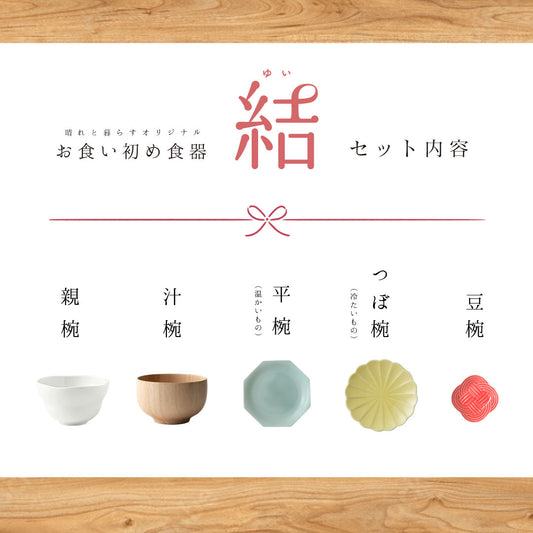
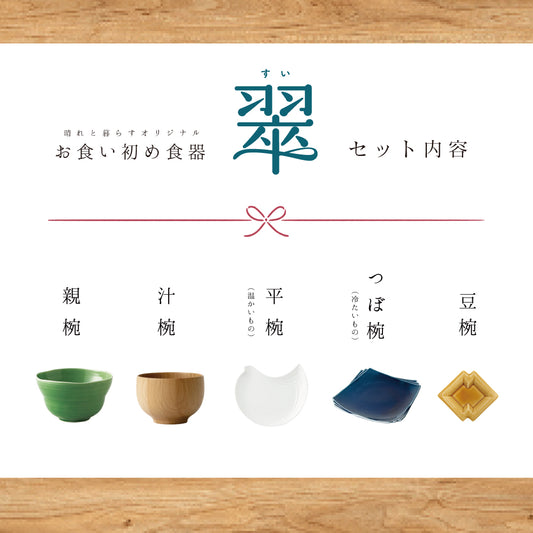
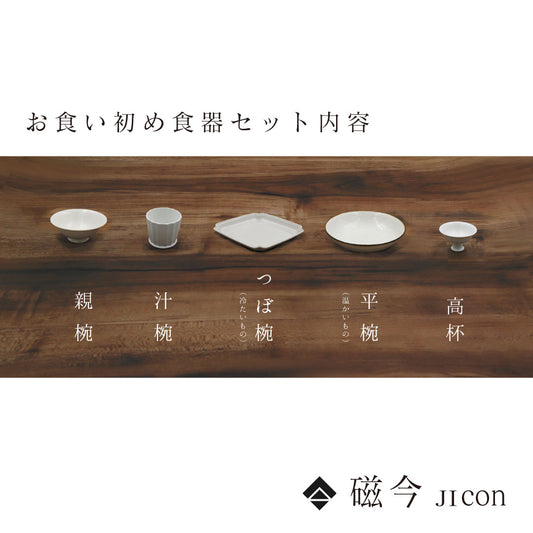
O-kuizome consists of five dishes.

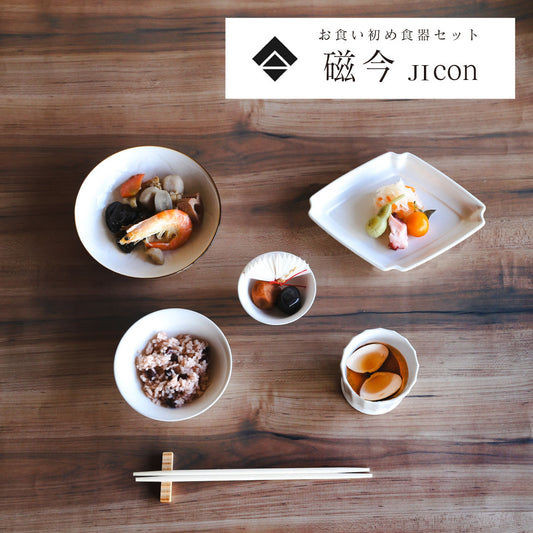
The "O-kuizome Gozen" has traditionally been based on the ancient Japanese menu of "Ichijusansai" (one soup, three dishes).
There are two types of "Ichijusansai": "Honzen Ryori" and "Modern Home Cooking," and either method is acceptable. "Honzen Ryori" is based on traditional Japanese dining etiquette, while "Modern Home Cooking" is based on everyday home cooking with nutritional balance in mind.
【Honzen Ryori】 In the "Ichijusansai" style of Honzen Ryori, grilled dishes (grilled fish) are formally served on a separate plate from the meal tray. In Honzen Ryori, rice is the main dish, and soup is its "accompaniment." Therefore, the main bowl and soup bowl are designed so that the lid fits inside the bowl, while the flat bowl for side dishes and the lidded bowl have lids that cover them from the outside, distinguishing them.
【Modern Home Cooking】Front left ▶ Rice・Front right ▶ Soup・Back right ▶ Main dish (meat or fish)・Back left ▶ Side dish (somewhat heavy side dish)・Middle ▶ Second side dish (light side dish) The shape of each dish is chosen according to the food to be served.
O-kuizome Cuisine

The contents of the menu vary widely, often incorporating local specialties and seasonal ingredients. There are no strict rules that must be followed.
Prepare a celebratory meal for your family and wish for the baby's future health and happiness.
・Use seasonal ingredients.
・Ensure a variety of ingredients, including vegetables, fish, seafood, and mountain products.
・The current "O-kuizome" is a combination of the "O-kuizome" ritual for feeding rice and the "Uoaji Iwai" (fish-tasting celebration) ritual for feeding fish, so it is generally recommended to serve fish rather than meat.
Tableware Colors
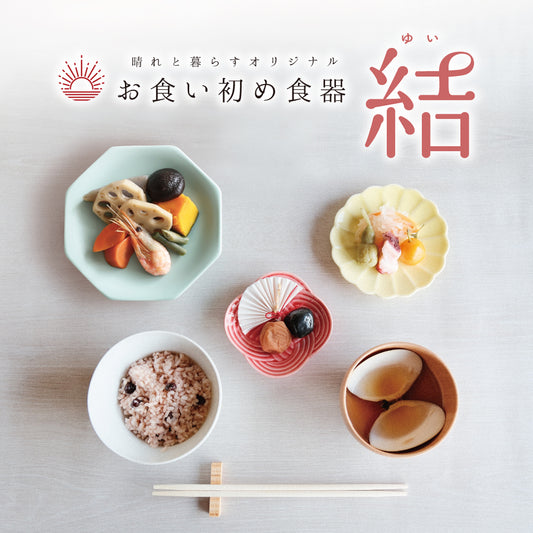
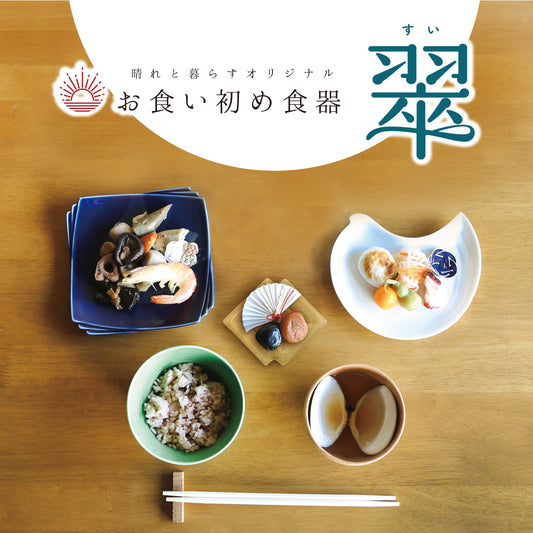
【Hirawan】Nimono (Simmered dish)

There are no specific rules for the ingredients of nimono; local specialties and seasonal ingredients are often added. Generally, taro, lotus root, bamboo shoots, shiitake mushrooms, and shrimp are classic choices, each carrying various meanings, origins, and sentiments.
【Tsubowan】Namasu (Vinegared dish)

A dish designed to be auspiciously colorful.
Vinegared dishes serve to refresh the palate and reset the taste buds. For good luck, kohaku namasu (red and white vinegared daikon and carrot) or vinegared octopus (from the pun "tako" for octopus and "tako" for many blessings) are added.
【Oya-wan】Sekihan (Red bean rice)

In ancient times, the color red was believed to ward off evil and protect against misfortune. Sekihan is indispensable not only for O-kuizome but also for various celebratory occasions.
【Shiruwan】Osuimono (Clear soup)

To wish for the baby to grow up strong by "powerfully sucking breast milk," a traditional clear soup with rich dashi is served. The typical ingredient is clams, symbolizing "being blessed with a good partner."
【Takatsuki/Mame-wan/Taka-wan】Kounomono (pickles) / Hagatameishi (tooth-hardening stone)

Around 100 days after birth, some babies start teething. A "tooth-hardening stone" is prepared, wishing for strong teeth to grow. Also, pickled plums are typically added to symbolize patience and longevity.
Celebration Table: A Feast of Colors

The O-kuizome ceremony, with its wishes for "never being troubled by food throughout life" and "strong teeth to grow," also includes the desire for the daily mealtimes with the baby to be filled with even more smiles in the future.
We hope you can enjoy a celebratory meal that enriches your daily life.
<Items used this time>
▼Click on the image to go to the [Product Page]▼


"Hare to Kurasu" original O-kuizome tableware, selected from a curated collection of fine dishes.Make your celebration table and daily dining vibrant and elegant. We have assembled a collection of natural yet colorful tableware. We hope your family's celebratory table will be even more brightly colored.